
 The purpose of growing a garden is to raise the child's awareness of plants. All aspects of a curriculum can be accessed through the garden. You can design a whole years worth of study around plants - studying their germination (birth), life and death (decomposition). Children learn where natural consumer products actually come from. Before taking on this endeavor, introduce the children to fruits, vegetables, and trees native to where you live. Prepare activities aimed at introducing fruits,vegetables, trees and plants familiar to the children.
 |
| winter garden snap pea blossom |
 |
| winter garden snap pea |
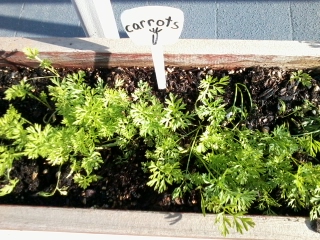 |
| carrots mid December |
Gardens awaken an enthusiasm for work, nutrition, learning and community cooperation, responsibility and preservation of the environment. Gardening with children helps develop their understanding of their relationship with nature. Advance planning is important for a successful garden. Consider a sensory garden when selecting your plants. Either way, maintaining a garden promotes gross motor development. Gardening chores such as digging, carrying watering cans full of water, planting and weeding.
Schedule field trips to local lavender farms, berry farms, pumpkin patches, farmers market, orchards, nurseries, etc. Use your local libraries to check out books on plants and horticulture to fill your classroom library. Ask parents if they have old gardening magazines they would be willing to donate for you to use in your classrooms study of plants.
Materials Needed:
buckets, seed markers, desire, commitment, volunteers, sun,water, drainage, soil, access for little people, tools for little people, tool storage, add flowers in the garden to attract pollinators, start a garden newsletter as soon as you have a plan. Plan backwards decide when the harvest will be - preferably before the school year ends so you can have a harvest party!
 |
salad garden to feed the
classroom pets |
 |
| WORMS are vital to the health of your soil & the kids love to observe them and hold them |
 |
| cabbage moth larvae |
 |
| pests: the children enjoyed seeking these guys out and picking them up with tweezers and observing them outside of the garden |


